
This is the fastest the markets have taken to get out of bottom, compared to previous crises.

The rights issue price has been set at Rs 1,257 a share, a discount of nearly 14 per cent to the last closing price of Rs 1,459. The company had set May 14 as the record date for the rights issue, which meant shareholders as on that day would be eligible to apply. Shareholders will be able to apply for one share for every 15 shares held.

Currently, the investor and his family's net worth in listed firms stands at Rs 8,517 crore, compared to Rs 8,388 crore as of March 31, 2020.

The S&P BSE Small-cap index has recovered 26 per cent as compared to a 23 per cent rise in the S&P BSE Sensex.
Titan, NCC, Delta Corp, Karur Vysya Bank, Aptech, and Jubilant Life Sciences are among stocks in Jhunjhunwala's portfolio that have taken a severe hit, falling more than 50 per cent during the period.
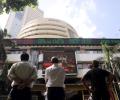
The bulk of the erosion in terms of value took place in India's most-valued firms. For instance, Mukesh Ambani-led Reliance Industries alone has lost Rs 3.8 trillion in m-cap, followed by HDFC Bank, which has seen its value erode by Rs 2.45 trillion and Tata Consultancy Services (TCS), which has lost Rs 1.85 trillion to stand at Rs 6.24 trillion, making it India's most-valued.

'The only thing that is safe right now are government securities.'

While a coordinated aggressive monetary easing from the central banks is most likely to offer some respite in the near-term, it is unlikely to improve the sentiments.

Market players said NBFCs and HNIs are recalibrating their plans based on the changing dynamics.

Both indices are down nearly 9 per cent from their all-time highs in mid-January. A sharp reversal seems difficult this time as the peak impact of the virus is yet to play out.
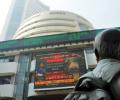
The answer to that depends on whether the globe is able to contain the virus spread, says Samie Modak.

Naved Masood, former secretary in the Ministry of Corporate Affairs and Sebi board member; TV Mohandas Pai, chairman of Manipal Global Education and Dinesh Kanabar, CEO, Dhruva Advisors have ceded their position on the NSE board following end of their tenure.

With an m-cap of Rs 31,744 crore, IRCTC stood at 96th position in the overall market capitalisation ranking, the BSE data shows.

At issue size of Rs 10,355 cr, the offering will be Asia's biggest this year and fifth-largest domestically.
Amendment to the Act, sovereign guarantees, investment portfolio, realty holdings, and governance issues to shape valuation.

In the past 10 trading sessions, shares of the state-owned company have shot up more than 50 per cent.

On an overall basis, Nomura believes the economic conditions are suited for equity markets. The brokerage is predicting the market performance will be better in the first half of 2020 and "somewhat weaker" in the second half.

Hopes of revival and earnings growth in 2020, surprise tax cuts, and robust foreign flows - thanks to easy global monetary policies - are a few reasons why the markets have managed to digest the low GDP footprint. Select bluechips such as Reliance Industries, Bajaj Finance, Asian Paints, and ICICI Bank have gained sharply this year. On the other hand, YES Bank, Zee Entertainment, and Indiabulls Housing have seen a sharp fall.

In the aftermath of the Karvy incident, lending against third-party collateral facility raises questions over regulations concerning banks and brokers which are at loggerheads. While Sebi and NSDL have ordered the transfer of securities, which were kept as collateral, lenders followed the old business model of sanctioning loan against shares and allegedly overlooked certain parameters. Legal experts feel that this could lead to a collapse of the loan-against-shares market as it raises questions over the sanctity of the pledged securities.

Investment experts said the key to generating superior returns was "asset allocation" and taking money out of the table from themes that have performed well and into themes that are available at a discount.
